Herbicides

Herbicides
Herbicides

Introduction

Weeds are one of the biggest challenges in agriculture, competing with crops for nutrients, water, light, and space. Uncontrolled weeds can reduce crop yield by 30–70%. Herbicides play a vital role in modern farming by providing efficient, timely, and economical weed control, ensuring healthy crop growth and higher productivity.


Types of Herbicides

  1. Pre-Plant Herbicides – Applied before sowing

  2. Pre-Emergence Herbicides – Applied after sowing but before weed emergence

  3. Post-Emergence Herbicides – Applied after weeds emerge

  4. Selective Herbicides – Kill specific weeds without harming crops

  5. Non-Selective Herbicides – Kill all vegetation

  6. Systemic Herbicides – Absorbed and translocated within plants

  7. Contact Herbicides – Kill weeds on contact

  8. Residual Herbicides – Remain active in soil for longer control


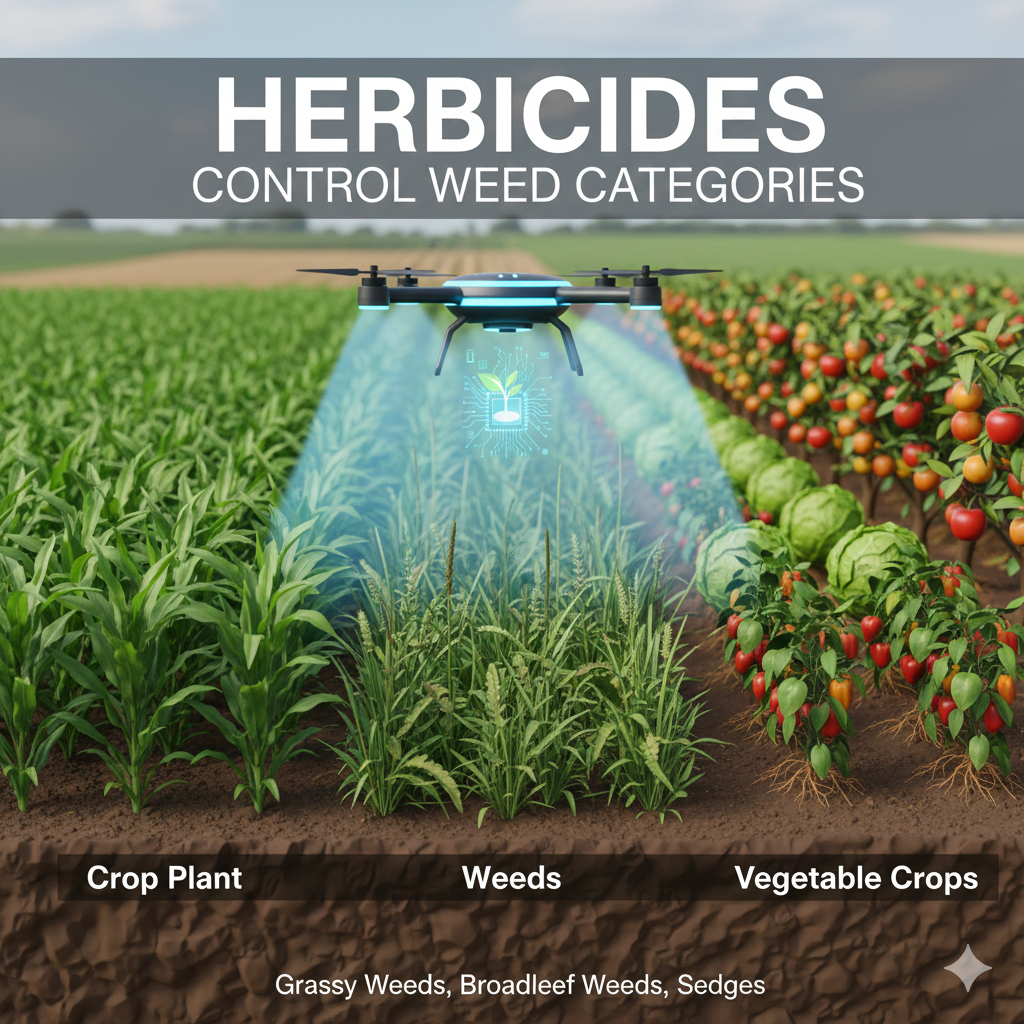
Control Weed Categories

  • Grassy Weeds – Echinochloa, Cynodon, Phalaris

  • Broadleaf Weeds – Amaranthus, Chenopodium, Parthenium

  • Sedges – Cyperus spp.


Chemical (Synthetic) Herbicide Groups

  1. Glyphosate group

  2. Paraquat group

  3. Phenoxy acids (2,4-D)

  4. Triazines (Atrazine)

  5. Sulfonylureas (Metsulfuron)

  6. Imidazolinones (Imazethapyr)

  7. Dinitroanilines (Pendimethalin)

  8. Chloroacetamides (Alachlor)

  9. Aryloxyphenoxy propionates (Quizalofop)

  10. Cyclohexanediones (Clethodim)

  11. Bipyridyliums

  12. Diphenyl ethers (Oxyfluorfen)

  13. Pyridine carboxylic acids (Clopyralid)

  14. Triketones (Mesotrione)

  15. Amides (Propanil)


Common Agricultural Weeds

  1. Parthenium hysterophorus

  2. Amaranthus viridis

  3. Chenopodium album

  4. Echinochloa crus-galli

  5. Phalaris minor

  6. Cyperus rotundus

  7. Cynodon dactylon

  8. Digitaria sanguinalis

  9. Setaria spp.

  10. Commelina benghalensis

  11. Avena fatua

  12. Portulaca oleracea

  13. Ipomoea spp.

  14. Rumex dentatus

  15. Trianthema portulacastrum

  16. Lathyrus aphaca

  17. Anagallis arvensis

  18. Vicia sativa

  19. Borreria spp.

  20. Leptochloa chinensis

  21. Brachiaria spp.

  22. Ischaemum rugosum

  23. Fimbristylis spp.

  24. Scirpus spp.

  25. Alternanthera sessilis

  26. Celosia argentea

  27. Solanum nigrum

  28. Malva parviflora

  29. Polygonum spp.

  30. Ludwigia spp.

  31. Erigeron spp.

  32. Bidens pilosa

  33. Cassia tora

  34. Xanthium strumarium

  35. Sorghum halepense

  36. Eleusine indica

  37. Setaria glauca

  38. Paspalum distichum

  39. Oxalis corniculata

  40. Cyperus difformis


Benefits of Herbicide Use

  • Effective and fast weed control

  • Saves labor and time

  • Increases crop yield

  • Reduces nutrient competition

  • Supports large-scale farming

  • Compatible with Integrated Weed Management (IWM)


Best Practices for Herbicide Application

  • Identify weed species correctly

  • Use recommended dose and timing

  • Rotate herbicide groups to prevent resistance

  • Follow safety guidelines and protective gear

  • Combine chemical, bio, and mechanical methods

  • Avoid spraying during high wind or rain


Conclusion

Herbicides are essential tools for modern weed management. When used responsibly and integrated with bio and botanical solutions, they help farmers achieve higher productivity, sustainable agriculture, and long-term soil health.

ResearchAgritech.com – Science for Research Farming 🌱

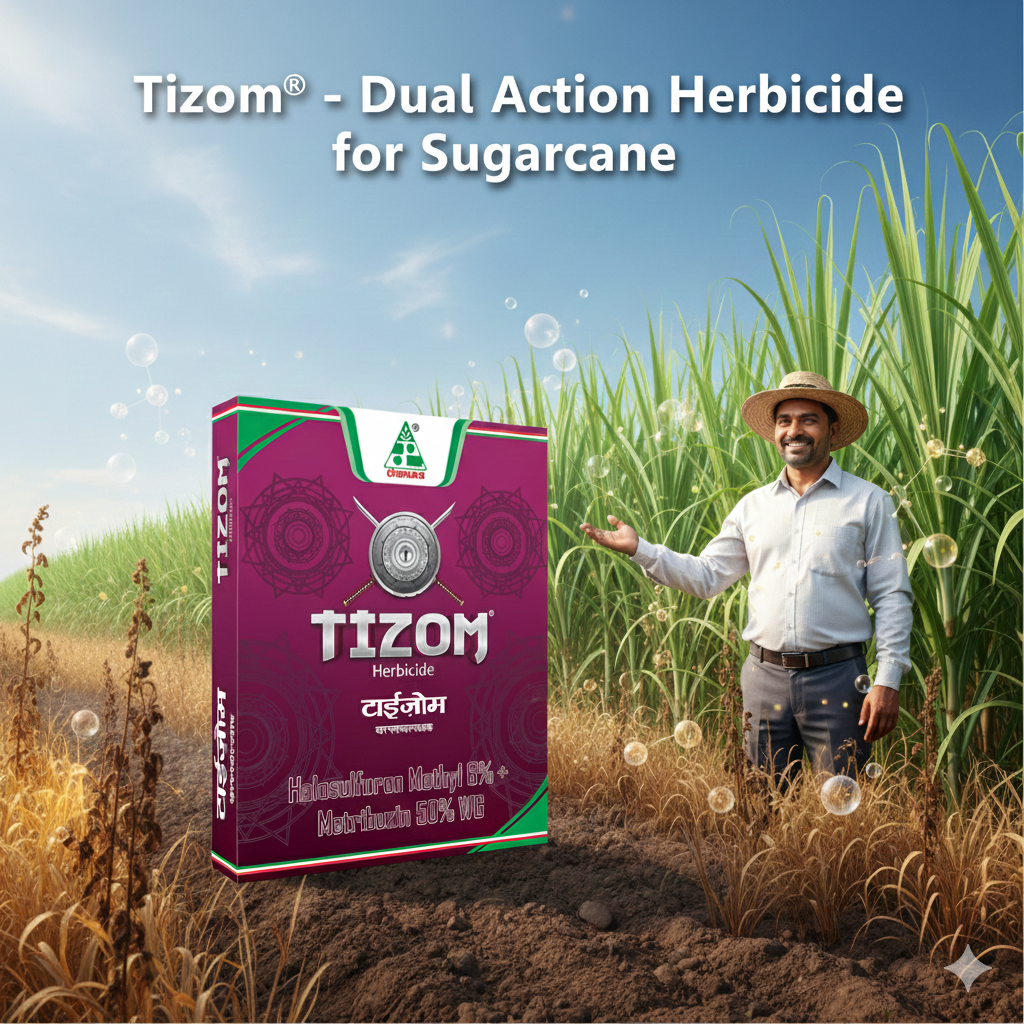
Tizom Herbicide

Dhanuka Tizom Herbicide Information with Dose, Benefits & Weed Control

Introduction Weed infestation is one of the most critical challenges in sugarcane cultivation. Weeds compete aggressively with the crop for nutrients, water, sunlight, and space, especially during early growth stages. If not controlled timely, weeds can reduce cane yield significantly and increase production costs due to repeated manual weeding. The problem becomes more severe with […]

Dhanuka Tizom Herbicide Information with Dose, Benefits & Weed Control Read More »