Hello world!
Welcome to WordPress. This is your first post. Edit or delete it, then start writing!
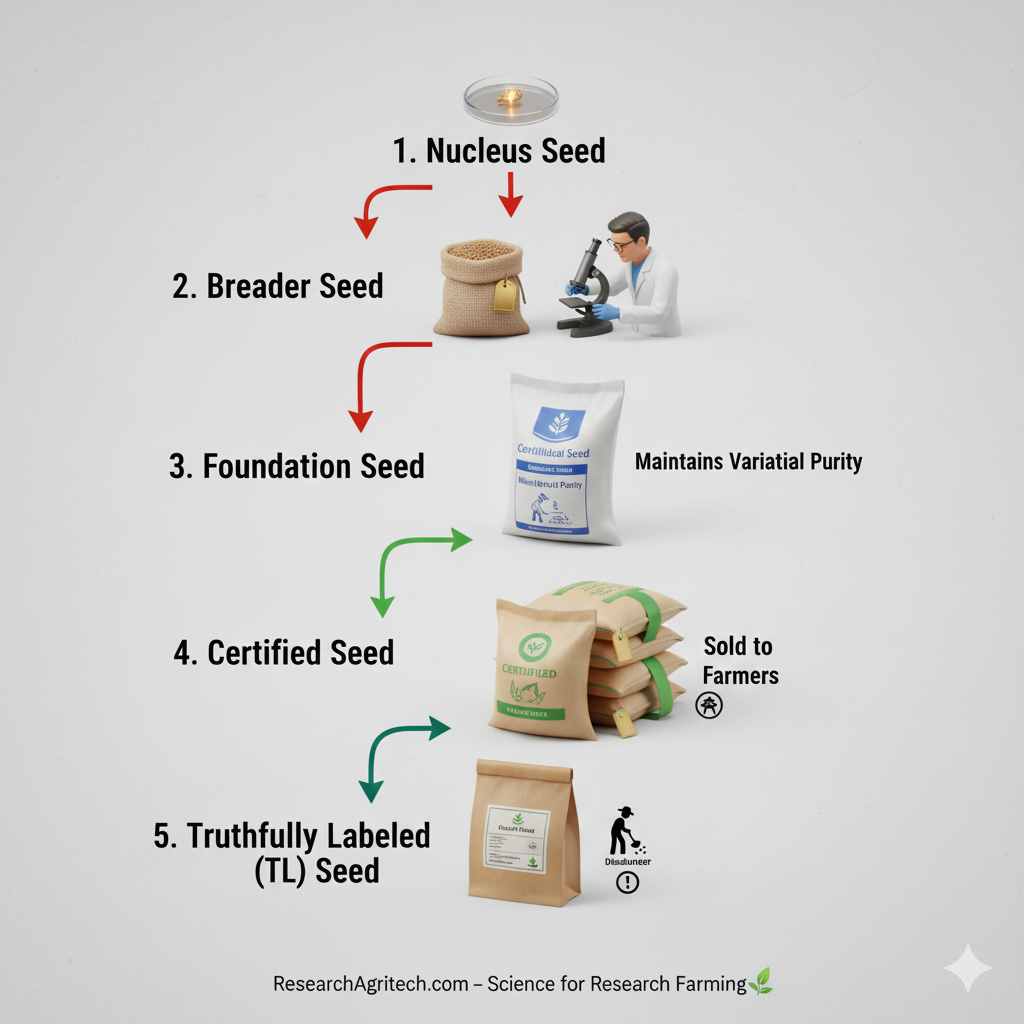
Seeds are the most critical input in agriculture. The success or failure of a crop largely depends on the quality, type, and category of seeds used. A healthy seed ensures better germination, strong plant growth, resistance to pests and diseases, and ultimately higher yield. In modern agriculture, the use of scientifically developed and certified seeds has become essential to meet the increasing food demand and ensure farm profitability.
Research-based seed technology helps farmers achieve uniform crop stands, improved stress tolerance, and better quality produce. Understanding different types of seeds and seed categories enables farmers to make informed decisions and maximize their returns.
Seeds play a vital role in:
Determining crop yield potential
Influencing plant vigor and growth
Enhancing resistance to pests and diseases
Improving crop quality and uniformity
Ensuring sustainability and profitability
High-quality seeds are the first step toward smart and scientific farming.
Open-pollinated seeds are naturally pollinated by wind, insects, or birds and maintain stable characteristics generation after generation.
Advantages:
Seeds can be saved and reused
Low cost
Well adapted to local conditions
Suitable for: Traditional and small-scale farming.
Hybrid seeds are produced by crossing two genetically different parent lines to achieve superior traits.
Advantages:
Higher yield potential
Better uniformity
Strong plant vigor
Limitation: Seeds cannot be reused for the next crop.
HYV seeds are developed through systematic breeding programs to improve productivity.
Advantages:
Higher production per hectare
Improved resistance to diseases
Better response to fertilizers
These seeds are developed using modern breeding and biotechnology tools.
Advantages:
Stress tolerance (drought, salinity)
Improved nutritional quality
Stable performance under adverse conditions
Organic seeds are produced without the use of chemical fertilizers or pesticides.
Advantages:
Suitable for organic farming
Environment-friendly
Maintains soil health
Seed categories ensure genetic purity and quality control.
Original seed maintained by plant breeders
Base material for all seed production
Produced under strict supervision of plant breeders
High genetic purity
Produced from breeder seed
Maintains varietal purity
Used to produce certified seed
Produced from foundation seed
Sold to farmers for commercial cultivation
Tested for germination, purity, and health
Quality seed labeled by the producer
Used when certified seed is unavailable
Good quality seeds should have:
High germination percentage
Genetic purity
Physical purity
Proper moisture content
Freedom from seed-borne diseases
While selecting seeds, farmers should consider:
Crop suitability to soil and climate
Variety performance in local conditions
Resistance to pests and diseases
Duration of the crop
Market demand and price
Seed treatment protects seeds during early growth stages and improves plant establishment.
Use of fungicides and insecticides to protect seeds from soil-borne diseases.
Use of beneficial microbes such as Trichoderma, Pseudomonas, and Bacillus.
Neem-based and plant extract formulations for eco-friendly protection.
Benefits of Seed Treatment:
Prevents early-stage diseases
Improves germination
Enhances root and shoot growth
Use recommended seed rate
Maintain proper spacing and depth
Ensure optimum soil moisture
Follow crop-wise sowing time
Avoid sowing in extreme weather
Higher yield and better quality produce
Uniform crop growth
Reduced crop failure risk
Efficient use of nutrients and water
Increased farm income
Always purchase seeds from authorized sources
Use certified seeds whenever possible
Avoid old, damaged, or untreated seeds
Store seeds in cool, dry, and ventilated conditions
Follow agricultural university and research recommendations
Research-based seeds help in:
Reducing chemical input usage
Improving soil and plant health
Enhancing climate resilience
Supporting long-term sustainability
Seeds are the backbone of agriculture. Selecting the right type of seed and certified seed category, combined with proper treatment and sowing practices, ensures higher productivity, crop stability, and sustainable farming. Farmers who adopt scientific seed management practices can significantly improve their yields and income.
ResearchAgritech.com – Science for Research Farming 🌱
Your trusted source for research-driven agricultural knowledge.
Writer – Durgaprasad Kewte